
Our Expertise
Our casualty simulations are designed to feel like real incidents while staying safe and fully controlled. The examples below show how we work with different organisations to add realistic pressure to their training, helping teams practise skills, communication and decision‑making before they face real casualties.
Case Study: RTC Exercise in a Competition environment
We were asked us to support a road traffic collision (RTC) exercise to be showcased at the National Emergency Services Show, involving fire and rescue, ambulance and police teams. Using realistic makeup and props, we created visible injuries including fractures, bleeding wounds and shock to mirror a complex scene. The casualties were placed in cars and cut out while the demonstration was broadcast live to the whole arena.
Snapshot of Recent Exercises
Here are a few examples of how our simulations have supported training across the region, providing realistic and safe environments for essential skill development.
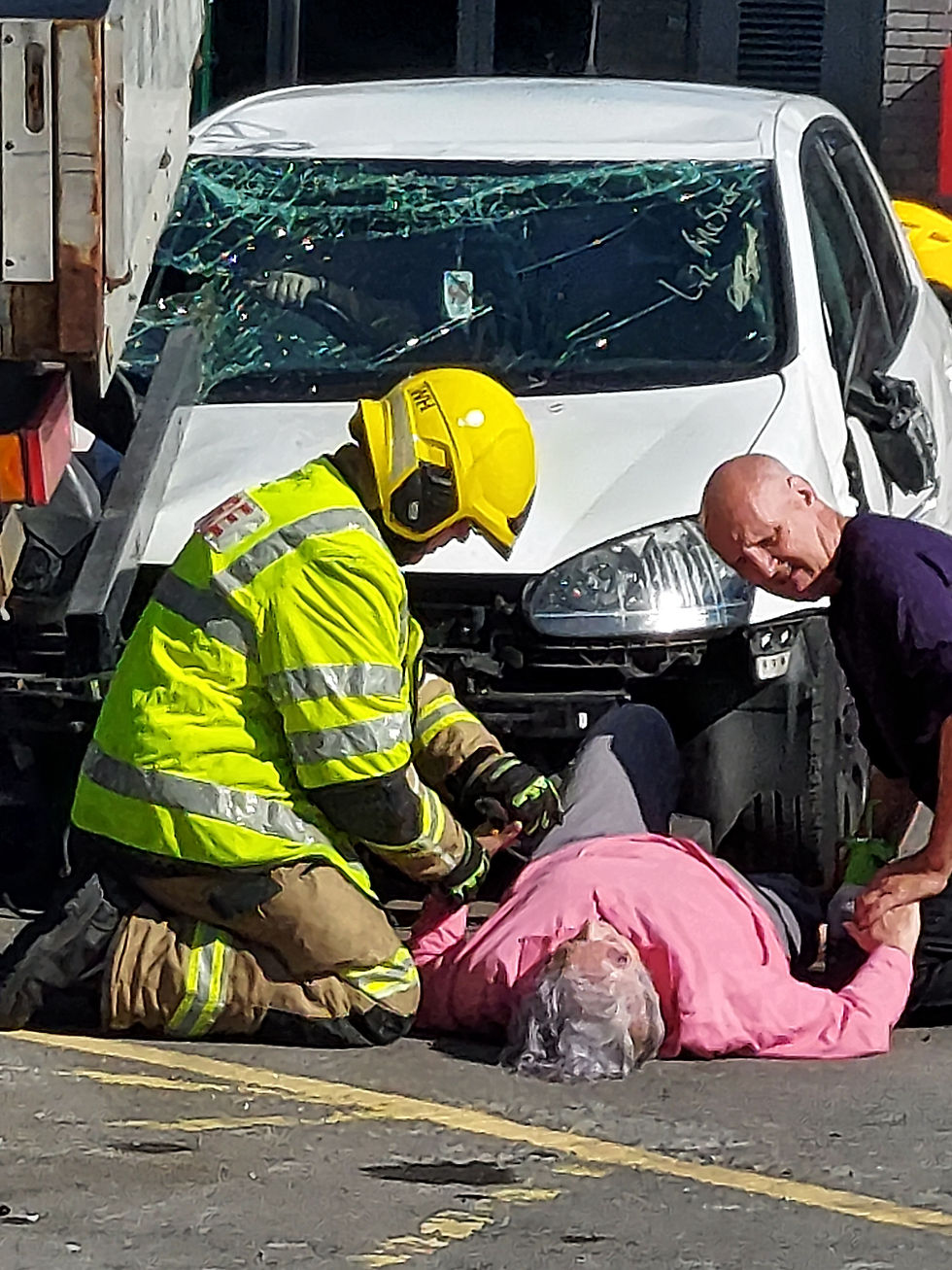
Case Study: Multi‑Casualty RTC Exercise
A Fire Service training centre asked us to support a large‑scale road traffic collision (RTC) exercise involving fire and rescue, ambulance and police teams. The goal was to test joint working, scene management and casualty care under pressure.
We provided a group of trained volunteer role‑players, each with a specific injury profile and brief. Using realistic makeup and props, we created visible injuries including fractures, bleeding wounds and shock. Casualties were positioned in and around vehicles to mirror a complex RTC scene.
Throughout the exercise, our volunteers reacted to changing instructions, delays and treatment as real people would. This helped crews practise triage, communication between services and safe extrication in a realistic but controlled setting.


Case Study: Woodland Search and Rescue
We facilitated a technical, multi-hour search exercise within the Wyre Forest to test operational endurance. Response teams navigated heavy Worcestershire undergrowth to locate missing persons, with our role-players presenting consistent clinical signs of hypothermia and impact injuries via professional moulage. This practical scenario required crews to manage complex casualty extraction and sustained medical care across difficult terrain.
As the hours passed in the forest, the initial drills evolved into steady, focused problem-solving. Responders noted that the presence of real people, rather than mannequins, changed their approach to the environment. Teams had to manage the physical fatigue of the terrain while simultaneously addressing the genuine discomfort and needs reported by our volunteers. This grounded interaction forced crews to improve their radio discipline and streamline handovers, as clear communication became essential for patient safety. By the end of the day, participants reported a practical boost in confidence, having tested their teamwork in a setting that felt less like a rehearsal and more like the complex, unpredictable scenes they encounter on duty.
Operational Strengthening: This Wyre Forest initiative significantly enhanced regional search and rescue readiness. By simulating life-threatening emergencies, we empower local response teams to protect the community.


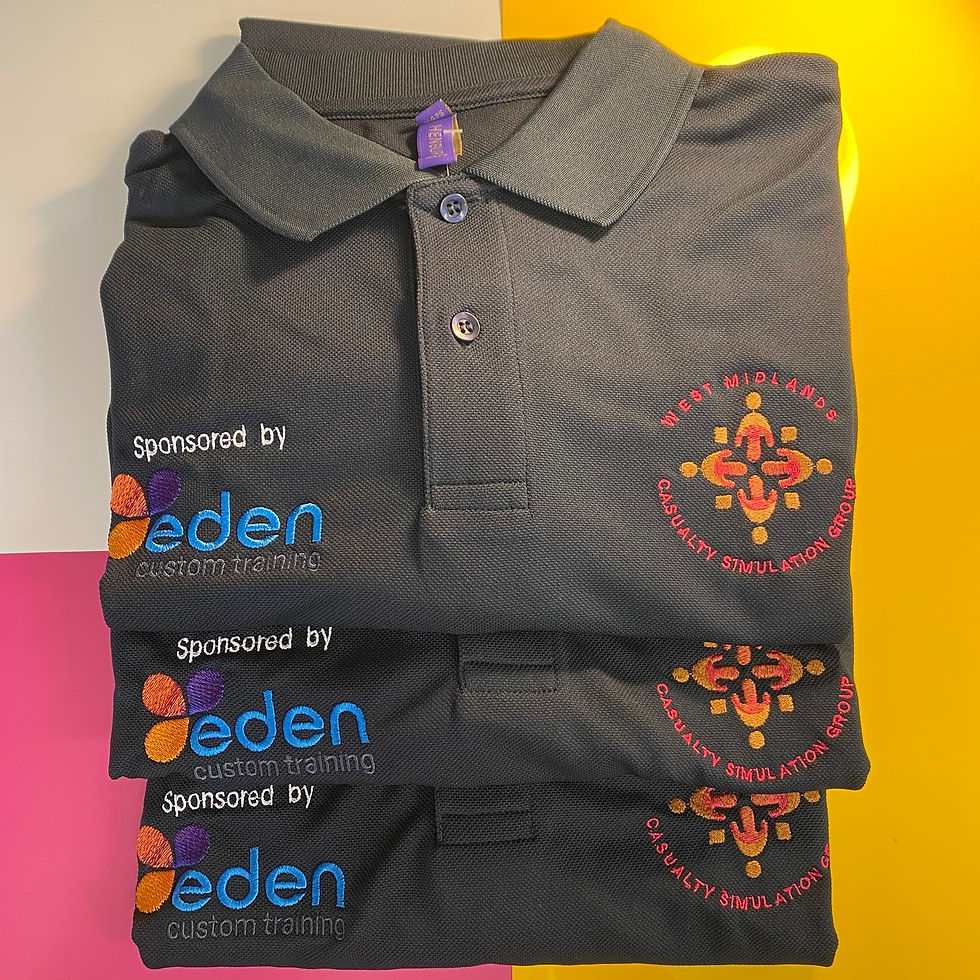
Case Study: Professional FREC 3 and First Aid Training Support
WM Casualty Simulation Group have partnered with a leading external training provider to deliver high-quality live casualties for several FREC 3 and First Aid courses. Our goal was to enhance the authenticity of the practical learning and final assessments.
Over multiple training days, we supplied a team of trained volunteer casualties to recreate realistic trauma and medical scenarios specifically designed to meet the FREC 3 syllabus requirements. Our volunteers utilised professional moulage and detailed briefs to simulate various conditions, including catastrophic bleeds, fractures, and medical emergencies. Because several members of our team also hold current FREC 3 qualifications, we were uniquely positioned to assist instructors during high-stakes assessments. This internal expertise allowed our actors to present precise clinical signs, symptoms, and behavioral responses that accurately mirrored the expected patient presentations. This level of detail ensured that students faced a true-to-life challenge, while providing assessors with a consistent and realistic platform to fairly judge student performance in accordance with national standards.
Result: The collaboration significantly improved learner confidence and overall assessment quality. By providing credible, syllabus-aligned casualties, we enabled the training provider to maintain a superior standard of realism that exceeded classroom-based expectations.

Case Study: Community Groups and Live Demonstrations
We recently visited a local community group to share the story of WM Casualty Simulation Group and explain our vital role in emergency response training. We provided a unique look behind the scenes of how we help prepare first responders for high-pressure trauma environments.
During the session, we showcased our professional kit, featuring the high-grade makeup and prosthetics used to build our scenarios. We demonstrated how we craft lifelike injuries from scratch, showing the audience the technical skill required to make every simulation as authentic as possible for those learning to save lives.
Community Engagement: These public sessions are a wonderful way to demystify our work and show the community how our dedicated volunteers contribute to safer local emergency services.
Training in Action
A visual showcase of our realistic casualty simulation, trauma scenarios, and cross-agency training exercises across the UK.


Measurable Impact for Training Teams
Feedback from exercise leads and participants highlighted how the presence of live, realistic casualties changed the feel of the training. Teams reported:
Urgency & Realism
Stronger sense of urgency and emotional realism throughout the exercise.
Agency Collaboration
Improved confidence in working alongside other agencies under pressure.
Scene Management
Clearer understanding of scene roles and casualty handovers.
Clinical Response
Better appreciation of how casualties actually present and respond.
These insights were used to refine future training plans, turning each exercise into practical learning that can be applied in real incidents.